Tracking public investment and construction projects
Faso Observatoire
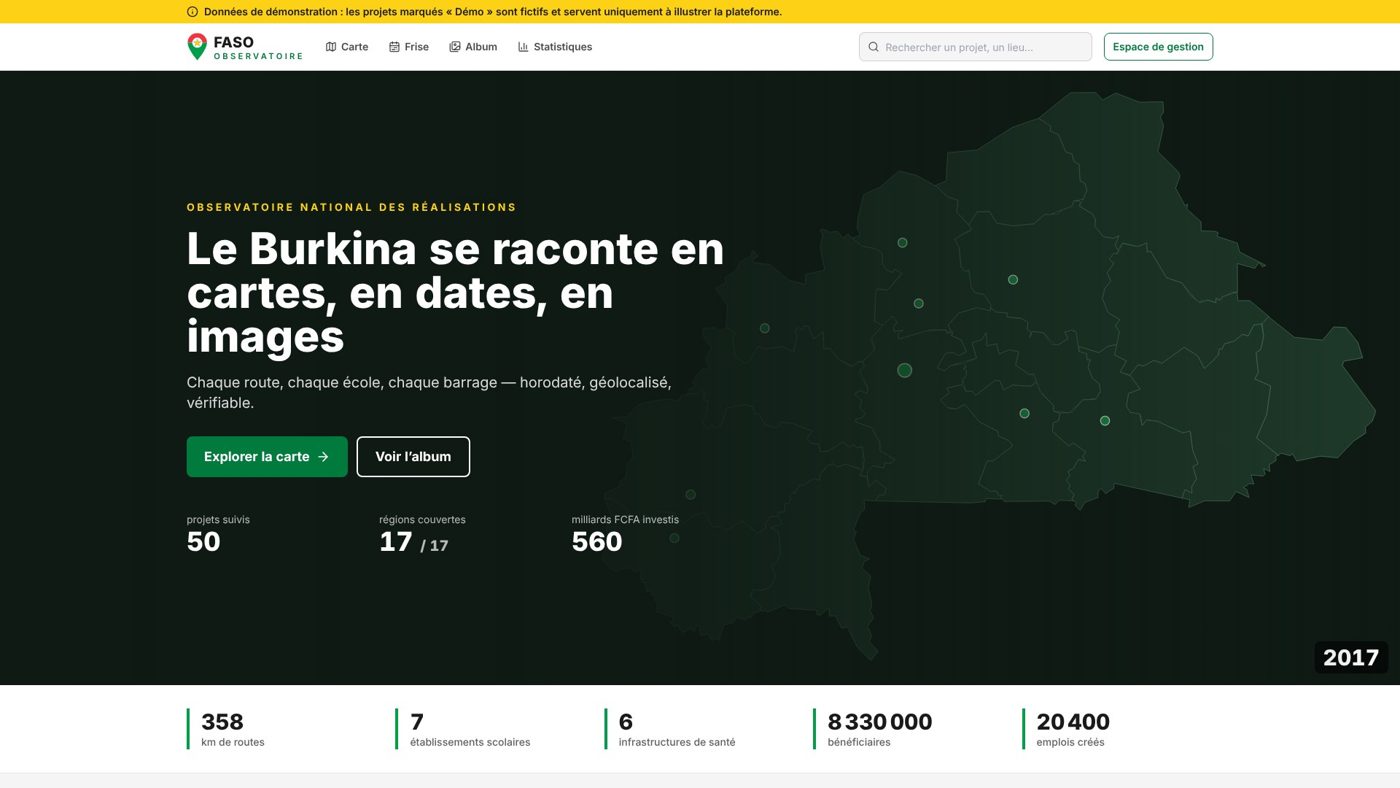
Every road, every school, every dam — time-stamped, geolocated, verifiable. A national observatory of achievements, on a map, a timeline and a before/after album.

An observatory turns scattered information into a shared, mapped and sourced picture. It is a steering tool for the institution and a trust tool for the public.
Ministries, local authorities, agencies, donors and civil-society organisations need to track what happens on the ground: construction projects, employment, security, prices, public services. The data often exists, but it is scattered across reports, spreadsheets and press releases, with no common method or proof of reliability.
Africa Data Entry designs complete observatories: indicator scoping with business teams, collection plan, geographic database, interactive map, dashboards, open data, a management area with a validation workflow, and a mobile app. Every published data point is dated, located and linked to its source.
We have already delivered three such platforms in Burkina Faso — Faso Observatoire (public projects), Faso Bara (employment and career guidance) and Faso Sécurité (public security). They can be hosted in-country, are accessible to visually impaired people and are built to work on unstable connections.
Questions to answer, indicators, classifications, up-to-date territorial divisions (17 regions and 47 provinces in Burkina Faso), publication rules.
Collection plan, field forms, multi-step validation workflow, blocking quality checks and a reliability score for every record.
Interactive map, timeline, statistics by region and sector, exportable detail pages, mobile version.
Roles and permissions, audit log, moderation, open API and exports (JSON, CSV, GeoJSON), sovereign hosting.
Context, solution, result: two representative assignments.
Construction projects (roads, schools, health centres, dams) were tracked in scattered documents, with no national view or verifiable proof.
Interactive map, 1960–2030 timeline, before/after album, regional statistics, sourced project pages and an 8-step collection module with a reliability score.
A platform delivered as version 1.0, tested (234 automated tests) and compliant with WCAG 2.1 AA accessibility rules.
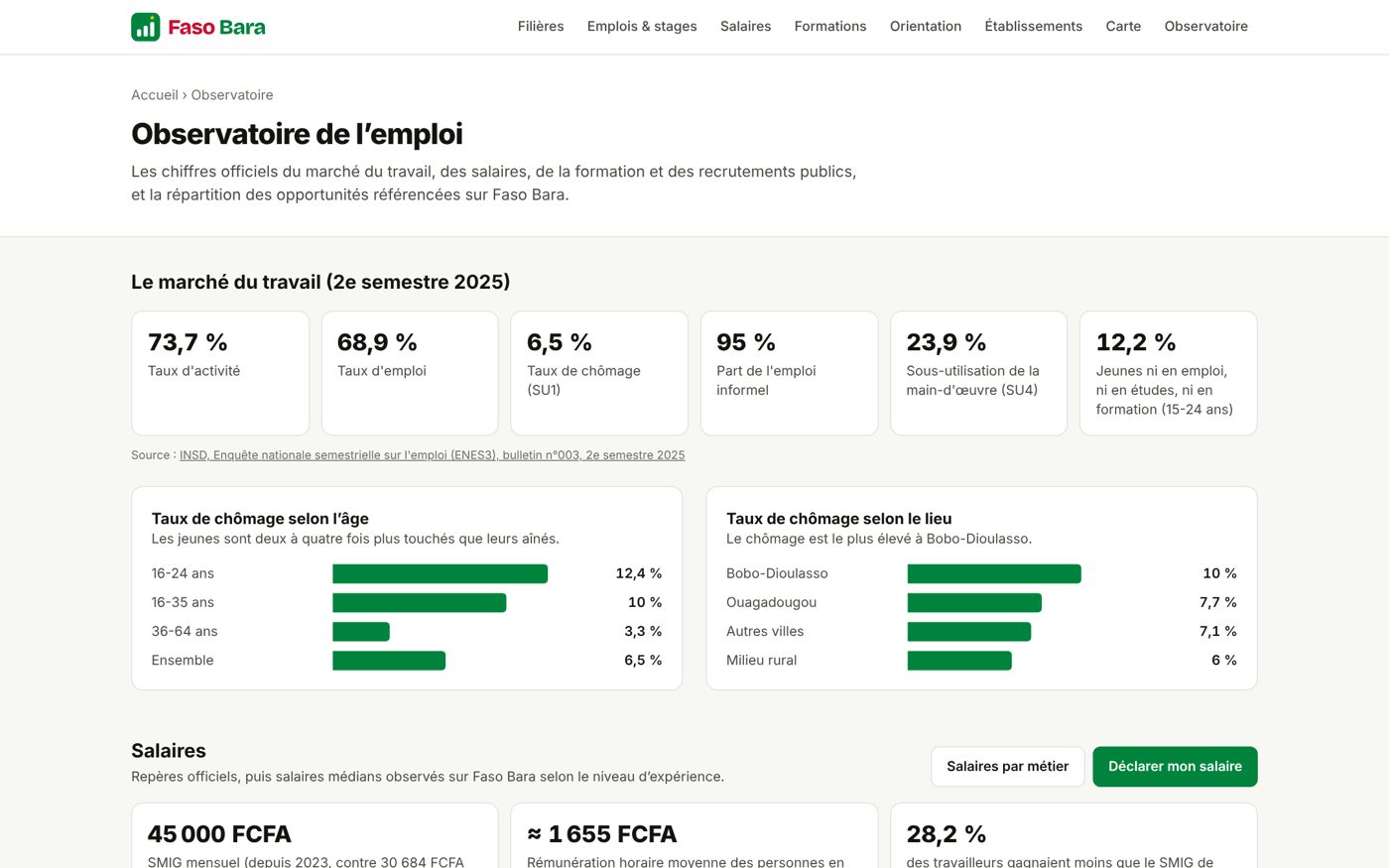
Study programmes, competitive exams, job offers and salaries were published by different players and often discovered too late by young people.
A single entry point: guidance by profile, programmes and institutions, opportunities map, labour-market and salary observatory.
Every figure shown cites its source; job offers go through a moderation queue before publication.
It depends on the scope. A first operational observatory (map, records, dashboard, management area) takes a few months to build; we always propose a pilot phase on a limited scope before scaling up.
Wherever you decide. Our observatories are designed to be hosted in-country, with no mandatory dependency on a foreign cloud service.
Your teams, through the management area and the validation workflow. We train field agents and administrators, and can also handle collection, maintenance and hosting if you wish.
Yes. Our platforms expose documented APIs and can receive data from other systems, with signed and logged exchanges.
Tracking public investment and construction projects
Every road, every school, every dam — time-stamped, geolocated, verifiable. A national observatory of achievements, on a map, a timeline and a before/after album.
Youth employment, training and career guidance
“No young person in Burkina Faso should choose their studies or career blindly.” Study programmes, institutions, job offers, competitive exams, salaries and labour-market indicators in one place.
Public security and citizen alerts
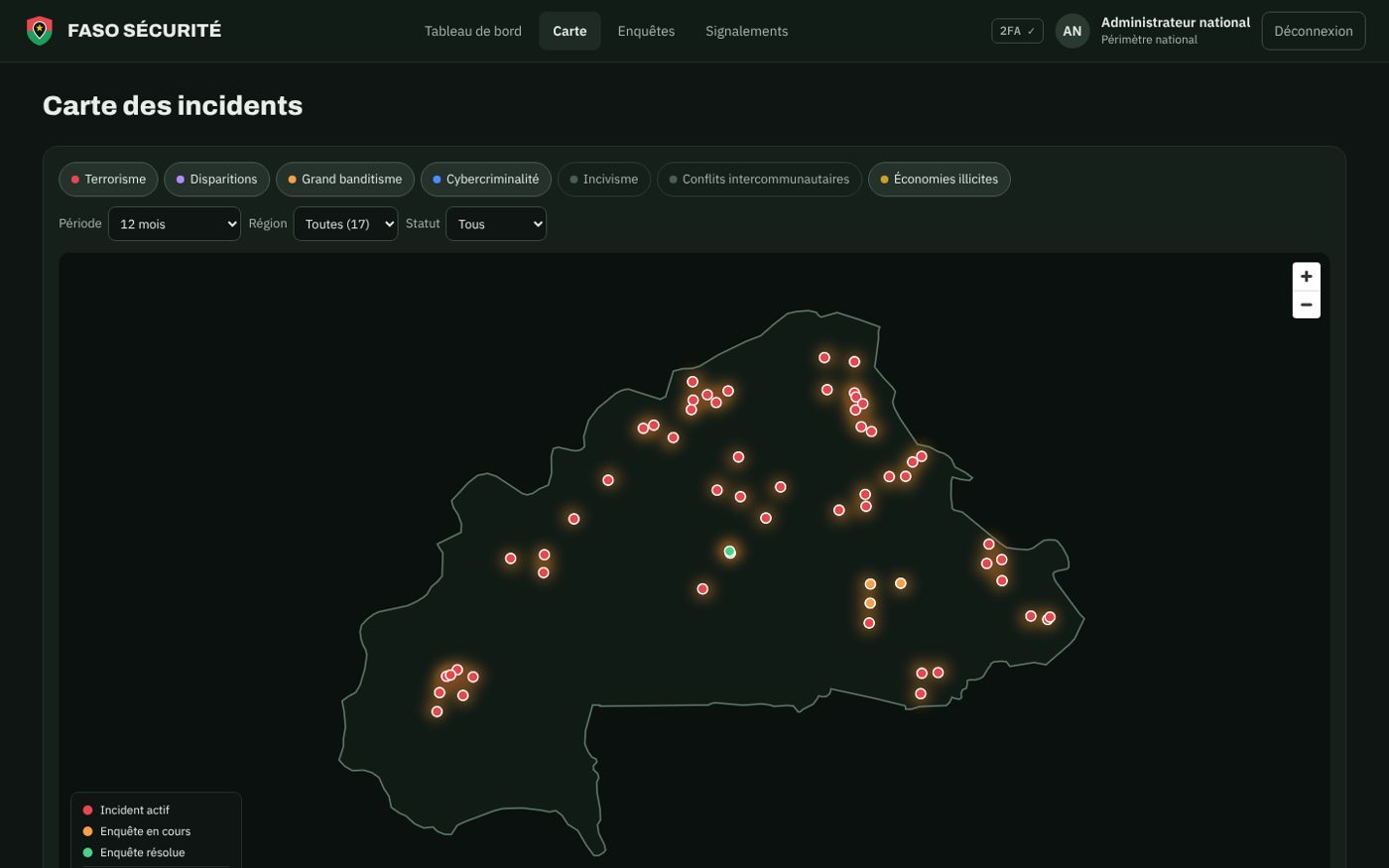
See, investigate, understand, protect: a sovereign platform that brings security information together on a single map, tracks every case end to end and lets citizens raise alerts safely.

Case study

Case study

Case study

Case study

Case study

Case study

Case study

Case study
Insight
Article
Article
Insight
White paper

Infographic

Podcast
Free first conversation, reply within one business day.
ADE assistant
Instant replies · team available 8am–5:30pm